
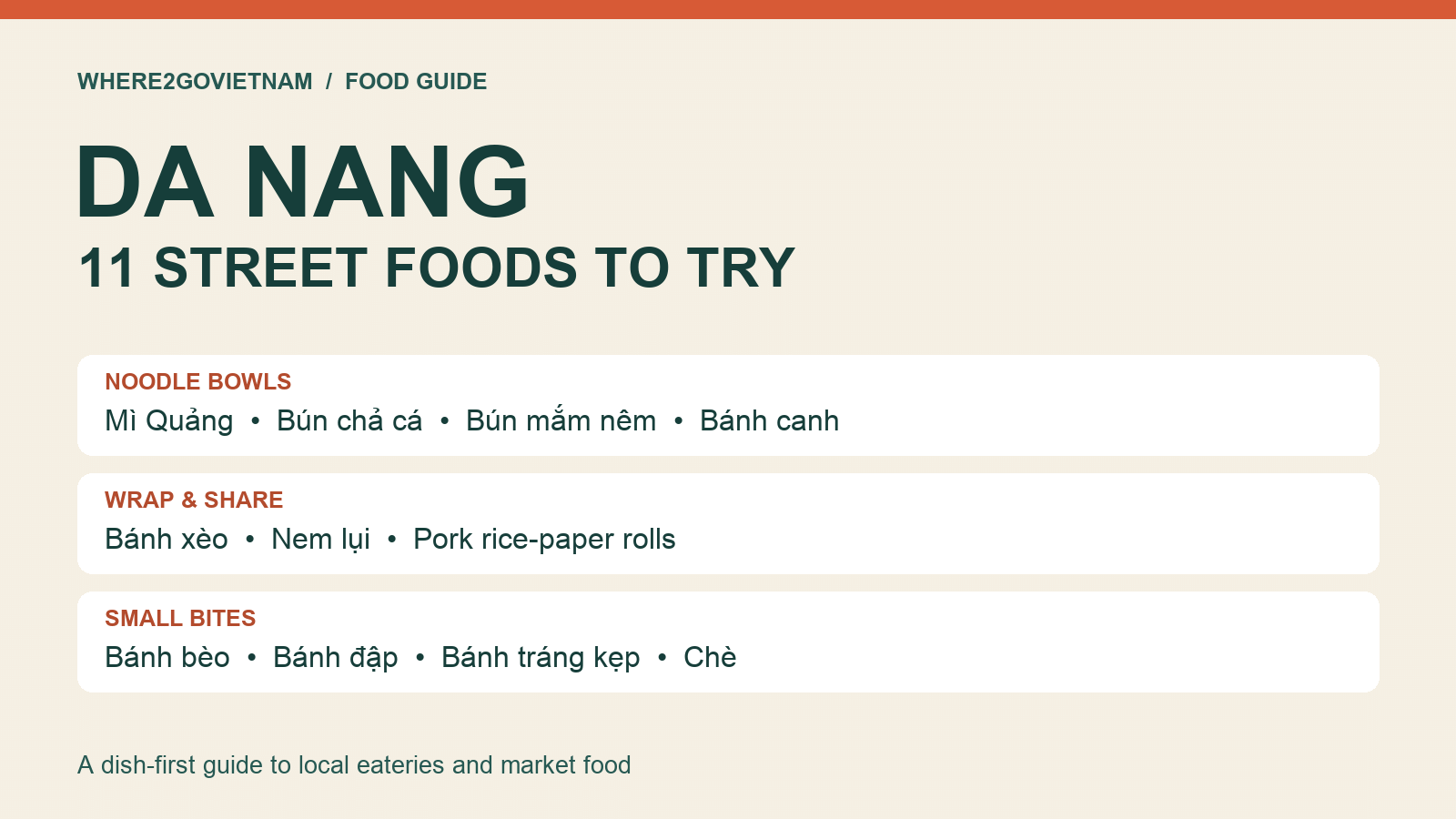
For a first taste of Da Nang street food, start with mì Quảng, add a plate of bánh xèo and nem lụi to share, then try bún mắm nêm if you enjoy bold fermented flavors. The city’s food is closely tied to central Vietnam: rice noodles, small savory cakes, pork wrapped with herbs, seafood and sauces that deserve as much attention as the main ingredient.
These eleven dishes include market food and small specialist eateries, so you can eat locally without depending on a night market. Each has a named place or specific market area to start. Choose three or four across a day rather than trying to fit eleven into one meal.
Da Nang street food: choose your first dishes
| Dish | Choose it for | Place to start | Dietary detail to check |
|---|---|---|---|
| Mì Quảng | A substantial noodle breakfast | Hồng Vân, 59 Lê Hồng Phong | Shrimp broth, meat, egg |
| Bún chả cá | Fishcake noodle soup | Bún Chả Cá 109, 109 Nguyễn Chí Thanh | Fish and optional seafood toppings |
| Bánh xèo | Crisp pancakes to wrap | Bà Dưỡng, 280/23 Hoàng Diệu | Filling and pork-peanut dip |
| Nem lụi | Grilled pork skewers to share | Bà Dưỡng, same stop | Pork and dipping sauce |
| Bánh tráng cuốn thịt heo | Fresh herbs and build-your-own rolls | Quê Xưa, 165–167 Núi Thành | Pork and fermented anchovy sauce |
| Bún mắm nêm | A strongly seasoned noodle bowl | Bún Mắm Vân, K23/14 Trần Kế Xương | Fermented fish sauce and pork |
| Bánh bèo | Small steamed rice cakes | Bánh Bèo – Bánh Đập, 251 Phan Châu Trinh | Pork topping and peanuts here |
| Bánh đập | Soft rice sheet against crisp cracker | Same Phan Châu Trinh shop | Fermented dipping sauce |
| Bánh canh | Thick, chewy soup noodles | Bánh Canh Yến, 253 Nguyễn Hoàng | Fish-and-pork broth here |
| Bánh tráng kẹp | A rice-paper snack between meals | Dì Hoa, 62/2A Núi Thành | Egg, pâté or meat toppings |
| Chè | A sweet finish | Cồn Market’s prepared-food area | Dairy and individual toppings |
1. Mì Quảng: the noodle bowl to try first
Mì Quảng uses broad rice noodles with a relatively small amount of broth. Mix the noodles and toppings before deciding whether to add more seasoning. It is a useful first meal if you want something filling before sightseeing.
Start at Mỳ Quảng Sứa Hồng Vân, 59 Lê Hồng Phong. The MICHELIN listing for Hồng Vân describes shrimp-based broth and choices including pork, shrimp, quail egg, meatballs and jellyfish. Choose familiar toppings for your first bowl, or ask for sứa if you want jellyfish. Its listed service is 6am–1pm; plan this as a morning stop and reconfirm before a special journey.
2. Bún chả cá: fishcake noodle soup
Choose bún chả cá when you want a soup meal rather than a wrap or snack. Rice vermicelli sits beneath fishcakes; the broth at this particular shop gets a lightly sweet-sour character from pineapple and tomato.
Start at Bún Chả Cá 109, 109 Nguyễn Chí Thanh. Its official MICHELIN entry distinguishes steamed and fried fishcakes and lists additional fish and crab options. Order the basic fishcake bowl first if you want to understand the dish; check the price before adding several toppings. This is unsuitable for a fish-free diet, even if you remove visible pieces.
3. Bánh xèo: crisp pancakes with a wrapping ritual
Bánh xèo is a savory pancake, commonly filled with shrimp, pork and bean sprouts. Tear off a manageable piece and wrap it with herbs in rice paper, then dip. Keeping each roll small makes it easier to hold together.
Start at Bánh Xèo Bà Dưỡng, 280/23 Hoàng Diệu. The MICHELIN listing for Bà Dưỡng places the shop at the end of the alley and describes a minced-pork-and-peanut dip. Match the complete address as you walk in. The sauce matters for both pork avoidance and peanut allergies; a plate of herbs does not make the meal vegetarian.
4. Nem lụi: grilled pork skewers
Nem lụi offers a different texture from bánh xèo: seasoned pork formed around skewers and grilled. Wrap the meat with rice paper and herbs, sliding the skewer out before eating. It works well as a shared addition rather than another full noodle meal.
Try it at the same Bà Dưỡng stop. Skewered pork is part of the shop’s documented menu. Ask how many skewers come in an order before combining it with pancakes; confirm the dip if you avoid peanuts or particular meats.
5. Bánh tráng cuốn thịt heo: pork and herb rice-paper rolls
This is a DIY meal of sliced pork, rice paper and herbs, accompanied by mắm nêm. It suits travelers who enjoy assembling each mouthful and adjusting the balance of greens and meat.
Start at Quê Xưa’s Núi Thành branch, 165–167 Núi Thành. The MICHELIN branch listing identifies boiled pork belly and an anchovy-and-fruit dipping sauce. Make a small first roll and use a little sauce before committing to a large dip. This dish is pork-based, and replacing the meat alone would not remove fish from the sauce.
6. Bún mắm nêm: noodles with fermented fish sauce
Bún mắm nêm is a mixed vermicelli dish with a pungent fermented anchovy sauce, often combined with pork, herbs, young jackfruit and peanuts. It is a good choice if fermented flavors are a reason you travel. Do not expect the southern-style bún mắm soup: the Da Nang dish is built around sauce coating the noodles.
Start at Bún Mắm Vân, K23/14 Trần Kế Xương. The Da Nang food-tour directory entry confirms this alley address and the noodle dish. Save the full address, including the alley numbers. Ask for sauce separately if available, then mix in a little at a time. For more context, the city’s tourism portal explains Da Nang’s noodle dishes and their ingredients.
7. Bánh bèo: little steamed rice cakes
Bánh bèo comes in small portions that make it easy to taste without ordering another big bowl. Toppings vary between shops, so identify what is on the cakes rather than assuming every version has shrimp.
Start at Bánh Bèo – Bánh Đập, 251 Phan Châu Trinh. The shop’s MICHELIN entry describes rice cakes topped with pork and wood-ear sauce, shallots and peanuts. It lists afternoon/evening service, so this is a better later-day snack than a breakfast plan. Share a portion if you are also ordering bánh đập.
8. Bánh đập: soft rice sheet and crunchy cracker
Bánh đập combines a soft rice wrapper with a crisp rice cracker. Break it into pieces and dip: the contrast is the point, so eat it while the cracker is still crisp.
Try it at the same 251 Phan Châu Trinh shop. The documented version is made to order and served with a fermented dipping sauce. Ask what that sauce contains if you avoid fish; plain-looking rice layers are not enough to establish that the complete dish is vegan.
9. Bánh canh: thick noodles in a savory broth
Bánh canh is the choice for chewy, thick noodles. Recipes and broths vary, so the name alone does not tell you whether a bowl contains seafood or meat.
Start at Bánh Canh Yến, 253 Nguyễn Hoàng. Its MICHELIN listing identifies noodles made with rice flour and tapioca starch, a snakehead-fish-and-pork broth, and optional fishcake, quail egg or crab cake. Fried dough sticks are another available addition. Decide on toppings before ordering: requesting no pork pieces would still leave pork in this broth.
10. Bánh tráng kẹp: Da Nang’s rice-paper snack
Bánh tráng kẹp is a snack built around rice paper with savory toppings, folded or rolled and cooked. Egg, pâté and dried meat can appear in different versions. Point to the version you want and ask about the filling; the phrase “rice paper” describes the base, not the whole dish.
Start at Dì Hoa, 62/2A Núi Thành. Da Nang’s tourism authority identifies this family eatery and its rice-paper specialties, including grilled egg rice paper, in its 2026 dining guide. This stop pairs geographically with Quê Xưa on Núi Thành, but save room by treating it as a snack.
11. Chè: a sweet finish at Cồn Market
Chè covers several sweet preparations rather than one fixed recipe. Look at the available beans, jellies and other toppings before choosing. If you want a simpler order, point to one combination rather than requesting every topping.
Start in Cồn Market’s prepared-food area, at 290 Hùng Vương. The city tourism market guide confirms the market’s food areas and sweet options. Ask a food vendor to direct you to a chè counter currently serving; this is a market starting point, not a promise about one permanent stall. Check for condensed milk or other dairy if you eat vegan.
How to plan a Da Nang food day
For a short first outing: choose one noodle bowl, then share bánh xèo and nem lụi later. This gives you noodles, soup or broth, grilling and the rice-paper wrapping experience without too many stops.
For a market-led afternoon: start at Cồn Market for a look at prepared foods and a sweet finish. Save the Phan Châu Trinh rice-cake shop for its later service. Check current opening information before setting out, especially on holidays.
For a Núi Thành pairing: make Quê Xưa your pork-roll meal and Dì Hoa your smaller snack. These are on the same street, though you should still check the walking route and crossings rather than treating the street name as a guarantee of an easy stroll.
For an evening market outing, use our Da Nang night-market guide to compare areas, and check the chosen market’s current operation before traveling. A market’s overall hours do not mean every food counter serves for the entire period.
Ordering, prices and dietary checks
- Ask the unit price: is the quoted amount for a bowl, pancake, skewer or complete plate? Confirm extras before they arrive. Carry small Vietnamese đồng notes for small eateries.
- Control chili separately: ask for ít cay (less spicy) and avoid adding table chili until you taste the dish. A sauce may already contain chili.
- Check hidden ingredients: mắm nêm contains fish; dips may contain pork or peanuts; clear broth can contain meat. Egg and dairy need separate checks.
- Choose a specialist for plant-based meals: use our Da Nang vegetarian restaurant guide for a chay meal instead of trying to remove every animal ingredient from a specialist pork or fish dish.
- For allergies: explain the specific ingredient and ask about sauces and shared utensils. If staff cannot confirm, choose another meal; omitting a garnish does not establish allergy safety.
Da Nang street food FAQs
What should I eat first in Da Nang?
Start with mì Quảng for a regional noodle meal. Choose bánh xèo with nem lụi for a shared meal later. Add bún mắm nêm when you want a stronger fermented flavor.
Do I need to visit a night market to try street food?
No. Many of these dishes are served at specialist shops, and Cồn Market is a daytime option. A morning noodle stop and a later rice-cake snack can be more useful than searching for every dish at one night market.
Is Da Nang street food vegetarian-friendly?
Vegetarian versions exist, but these named fish and pork specialists should not be treated as plant-based recommendations. Check broth, fermented fish sauce, toppings, egg and dairy separately, or choose a dedicated vegetarian kitchen.
Are all eleven dishes unique to Da Nang?
No. Several are shared across central Vietnam or elsewhere in the country. Their local versions and the specialist shops serving them make them useful choices for eating in Da Nang.