
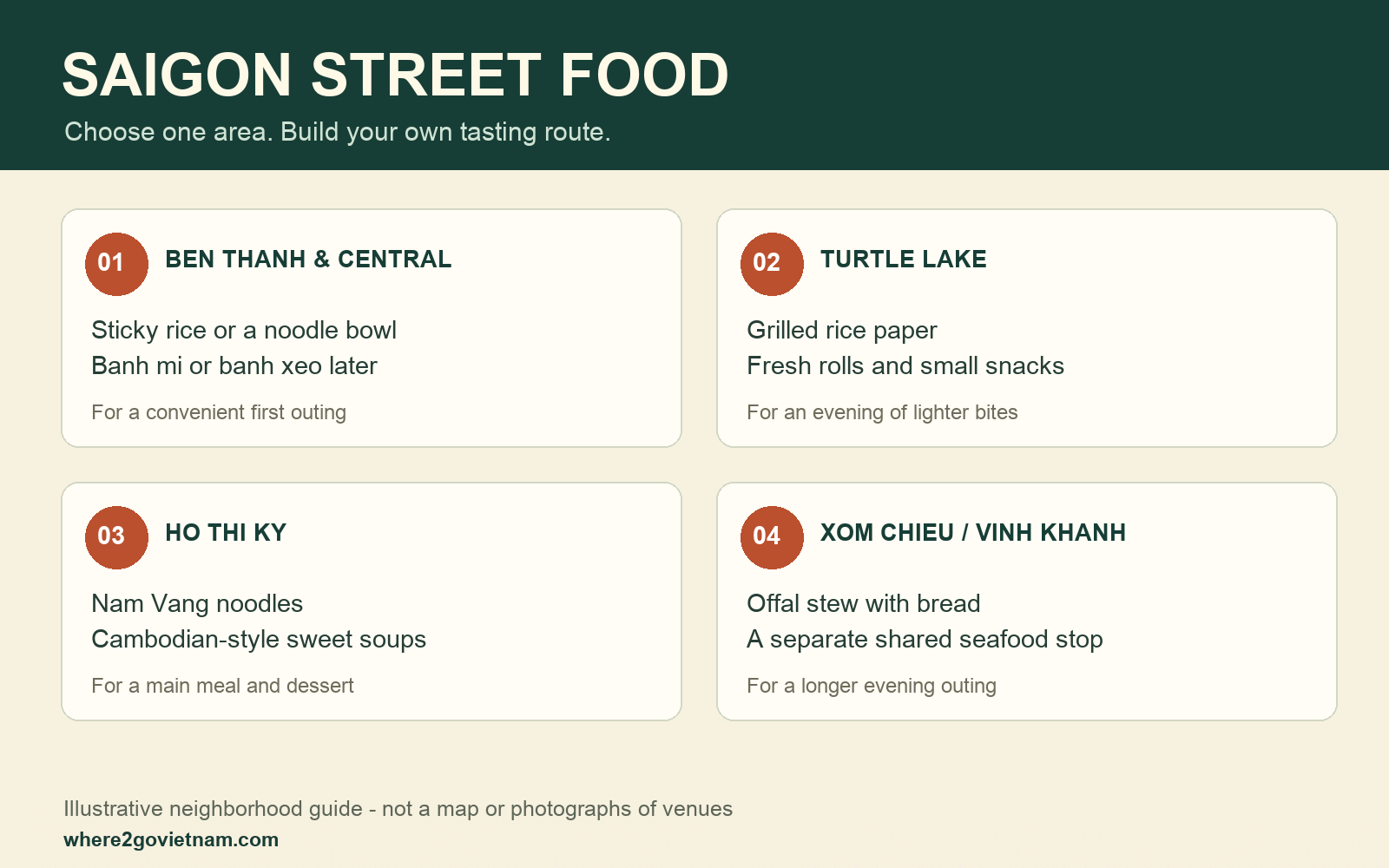
Start your Ho Chi Minh street food exploration with cơm tấm for a full meal, bánh mì for something portable, and bánh tráng trộn for an afternoon snack. Then choose one neighborhood for the rest of your eating: central Bến Thành for convenience, Turtle Lake for snacks, Hồ Thị Kỷ for variety, or Xóm Chiếu and Vĩnh Khánh for offal stew and seafood.
These 15 dishes cover substantial breakfasts, noodle bowls, small bites and dessert. Some starting places are specialist shops; others are food streets where you choose a vendor after looking at the menu. You do not need to eat everything in one day. If you prefer a longer sit-down meal, our Ho Chi Minh City restaurant guide covers a different style of outing.
Ho Chi Minh street food: choose your first dishes
| Dish | Choose it for | Starting place | Portion strategy |
|---|---|---|---|
| 1. Bánh mì | A filled baguette to take away | Huynh Hoa, Lê Thị Riêng | One sandwich; save room for later |
| 2. Cơm tấm | Rice and grilled pork | Ba Ghiền, Đặng Văn Ngữ | Make it your main meal |
| 3. Hủ tiếu Nam Vang | Pork-and-prawn noodles | Hồ Thị Kỷ food street | Choose soup or dry noodles |
| 4. Bún thịt nướng | Grilled pork without a soup broth | Hoàng Văn, Chấn Hưng | One bowl per person |
| 5. Bánh xèo | A crisp filled pancake | Ăn Ghiền, Sương Nguyệt Ánh | Share alongside another dish |
| 6. Gỏi cuốn | Fresh rice-paper rolls | Ăn Ghiền or Turtle Lake | Check whether priced per roll or plate |
| 7. Xôi gà | A filling chicken-and-sticky-rice stop | Xôi Gà Number One, Nguyễn Trung Trực | Choose this instead of a second rice meal |
| 8. Bò kho | Beef stew with bread or noodles | Bò Kho Gánh, Ngô Gia Tự apartments | Pick one accompaniment |
| 9. Bún mắm | Fermented-fish noodle soup | Bến Thành Market food court | Ask about the toppings first |
| 10. Bún riêu | Tomato-and-crab noodle soup | Alley 76 Hai Bà Trưng | A meal rather than a small snack |
| 11. Bánh tráng trộn | Chewy rice-paper salad | Nguyễn Thượng Hiền | One portion to share while exploring |
| 12. Bánh tráng nướng | Rice paper crisped over a grill | Turtle Lake snack area | Order after checking the toppings |
| 13. Phá lấu | Beef offal stew and bread | Alley 200 Xóm Chiếu | Share a small bowl if trying offal |
| 14. Ốc | Snails and a shared seafood meal | Ốc Oanh, Vĩnh Khánh | Agree on each dish’s price |
| 15. Chè | A sweet finish | Hồ Thị Kỷ or Bến Thành Market | One bowl or cup after savory food |
15 street foods to try in Ho Chi Minh City
1. Bánh mì: the portable first stop
A Saigon-style filled baguette can combine pâté, cold meats, cucumber, pickled vegetables, herbs and chili. Check the filling rather than assuming every bánh mì is the same. Bánh Mì Huynh Hoa lists its central shop at 26–30–32 Lê Thị Riêng, Bến Thành. Choose this when you want takeaway rather than another noodle bowl. Ask for không ớt if you want no chili; that does not guarantee every sauce is mild.
2. Cơm tấm: make grilled pork your main meal
Broken rice topped with grilled pork is a useful starting point if you want a substantial plate. Add-ons can change both the portion and the price, so point to the items you actually want. Cơm Tấm Ba Ghiền, at 84 Đặng Văn Ngữ, Phú Nhuận, serves a charcoal-grilled pork-chop version with pickles and fish sauce. Plan this as a separate meal outside the central snack circuit.
3. Hủ tiếu Nam Vang: decide between soup and dry noodles
These rice noodles commonly come with pork, prawns, minced meat and sometimes offal or quail eggs. The difference to decide first is nước, served in broth, or khô, dressed noodles with broth alongside. Begin at Hồ Thị Kỷ food street, where the city’s tourism guide identifies Nam Vang noodle vendors. Ask about the toppings before ordering if you avoid offal; leaving it off does not make the broth vegetarian.
4. Bún thịt nướng: grilled pork, noodles and herbs
Choose this when you want noodles without a bowl of hot soup. Grilled pork, rice vermicelli and herbs are brought together with dressing; peanuts and fried spring rolls are common additions. Bún Thịt Nướng Hoàng Văn is at 137 Chấn Hưng, Tân Hòa. It is a dedicated destination rather than a convenient extra stop on a downtown walk. Add dressing gradually if you prefer more control over the bowl.
5. Bánh xèo: share a pancake and wrap each bite
Bánh xèo is a savory rice-flour pancake, commonly filled with pork, shrimp and bean sprouts. Break off pieces, wrap them in the accompanying greens and dip. Bánh Xèo Ăn Ghiền, at 72–74 Sương Nguyệt Ánh, Bến Thành, lists its special bánh xèo at 135,000 VND on its website. This is a named restaurant serving a street-food classic; that price is not a citywide stall average. Confirm the current menu before ordering.
6. Gỏi cuốn: fresh rolls with a dip worth checking
These soft rice-paper rolls commonly contain pork, shrimp, rice noodles and herbs. They provide a different texture from fried snacks, but the wrapper does not tell you whether a roll is vegetarian. Ăn Ghiền’s menu explicitly lists gỏi cuốn tôm thịt, or shrimp-and-pork rolls; Turtle Lake is another starting area for rolls. Ask about peanuts, fermented fish and other ingredients in the dipping sauce. Vietnam Tourism’s guide to Vietnamese rolls explains the distinction between several wrapped dishes.
7. Xôi gà: sticky rice that deserves a full appetite
Chicken sticky rice is compact but substantial. Xôi Gà Number One, at 15 Nguyễn Trung Trực, Bến Thành, serves a version with chicken, egg, offal and gravy. Ask about those additions if you only want chicken. It makes sense as your central rice stop, especially if you are saving another day for cơm tấm. The shop also lists corn sticky rice, but do not assume that option is vegan: Michelin describes it with lard.
8. Bò kho: choose bread if you have had enough noodles
Beef stew offers a change from clear noodle broths. At Bò Kho Gánh, the address is 029, Block H, Ngô Gia Tự apartment complex, Vườn Lài; use the full business pin because the apartment-block address matters. Bread, noodles or rice can accompany the stew. For a varied food day, choose bread rather than automatically ordering another noodle meal. This is a deliberate sit-down stop, not something to squeeze between several large bowls.
9. Bún mắm: choose this for a stronger fermented-fish flavor
Bún mắm is a noodle soup built around fermented fish, with toppings varying by vendor. Begin at Bến Thành Market’s food court, which the city’s tourism guide identifies as a place to find it. Ask what comes in the bowl before paying, especially if you avoid seafood or pork. This is a better choice for someone curious about fermented flavors than for someone seeking a neutral broth. Do not confuse it with central Vietnamese bún mắm nêm, which is a different dish.
10. Bún riêu: a tomato-and-crab noodle stop
For a different soup profile, try rice vermicelli in tomato-and-crab broth. Tofu and other additions depend on the stall. Alley 76 Hai Bà Trưng is a useful central starting point: the tourism board lists crab noodle soup among its foods. Treat it as a meal, then keep your next stop small. The alley is recommended for late-afternoon eating; individual vendors do not share one guaranteed opening schedule.
11. Bánh tráng trộn: chewy rice paper rather than a fresh roll
Rice-paper strips are tossed with ingredients such as shredded green mango, Vietnamese coriander and shrimp seasoning; quail eggs, dried beef and peanuts can also appear. Start on Nguyễn Thượng Hiền, a street associated with this snack in the city tourism guide. Ask for less chili before mixing. This is a useful small order between meals, but removing visible meat does not remove shrimp seasoning already mixed into the dressing.
12. Bánh tráng nướng: choose your toppings before it hits the grill
Grilled rice paper is the crisp counterpart to bánh tráng trộn. At the Turtle Lake snack area, Công Trường Quốc Tế, Xuân Hòa, look for a vendor preparing it to order. Toppings vary, so identify what is being added instead of assuming a standard recipe. Pair one with a fresh roll if you want a snack outing with contrasting textures. The area is an evening gathering place, not a ticketed food court with uniform hours.
13. Phá lấu: a small bowl for adventurous offal eaters
Saigon-style beef phá lấu uses offal simmered with spices and coconut milk. The attraction is the combination of different textures, so this is a deliberate choice for offal eaters. Begin at Alley 200 Xóm Chiếu, an area the official city visitor site recommends for offal stew with bread. Share a small serving if you are unsure. Bread is useful for the sauce; confirm whether it is included or charged separately.
14. Ốc: order a shared seafood meal carefully
An ốc outing can include snails alongside other shellfish and seafood. Ốc Oanh, at 534 Vĩnh Khánh, Khánh Hội, provides a named starting place. Decide on the seafood, preparation and portion before agreeing to the order. Ask whether a price is per plate, piece or weight; a shared seafood bill can grow much faster than a noodle-bowl bill. Choose a few dishes first and add more if needed.
15. Chè: end with a sweet bowl or cup
Chè is a broad dessert family rather than one fixed recipe. Beans, jellies, coconut milk, fruit and other ingredients vary across styles. Hồ Thị Kỷ is a starting point for Cambodian-style sweet soups, while Bến Thành Market offers three-color chè. Choose what interests you from the visible ingredients rather than ordering the largest mixed serving automatically. Ask about dairy, egg and peanuts if relevant; a coconut-based appearance does not establish that every ingredient is vegan.
Three practical ways to group your eating
Central food stops: choose one main, then one snack
Use Bến Thành Market as your anchor. Choose xôi gà on Nguyễn Trung Trực or a market noodle bowl, then visit Lê Thị Riêng for bánh mì later if you still have an appetite. Sương Nguyệt Ánh gives you a sit-down alternative for bánh xèo and rolls. These are choices within the central area, not a requirement to eat four full meals. Check a walking route from your accommodation and allow for crossings, queues and the heat.
Turtle Lake: an evening snack outing
Choose this when you want several small orders instead of another restaurant dinner. Start with grilled rice paper or fresh rolls. Nguyễn Thượng Hiền offers another rice-paper-snack destination, but check the distance before adding it: it is not part of the same food square. Bring small cash and keep bags clear of passing traffic when stopping at roadside vendors.
Hồ Thị Kỷ or Xóm Chiếu: pick one area for the evening
At Hồ Thị Kỷ, build a meal around hủ tiếu and finish with chè. For Xóm Chiếu, start with phá lấu; add a Vĩnh Khánh seafood stop only if you want a longer outing and a larger budget. Look up each destination separately before booking transport. Do not ask a driver simply for “the street food market” and expect the same place.
Budget, timing and ordering without surprises
For planning, set aside 250,000–400,000 VND per person for a multi-stop food outing, then adjust to the prices you actually see. This is a suggested spending allowance, not a surveyed average or a promise that every route costs that amount. Transport, alcohol and a substantial seafood order need their own allowance. The 135,000 VND special bánh xèo above is a specific advertised item, not a guide to every pancake seller’s pricing.
Ask bao nhiêu tiền? (“how much?”) before ordering and confirm the number of portions. Check whether extras, drinks and bread are included. Takeaway-app prices can differ from counter prices. Small notes help where card payment is unavailable.
Use the linked operator pages for the latest shop information. Street vendors may sell out, change their pitch or stop trading in rain, and a neighborhood’s popularity does not establish any individual stall’s hours. Pin the business name and street address; district labels in older guides may differ from newer ward labels.
Choose food cooked to order and served hot where possible. Busy service alone is not a hygiene guarantee. If you have a serious allergy, use a translated allergy card and choose a place that can explain its ingredients and preparation. Broths, dips and seasonings can contain fish, shrimp, meat or peanuts even when those ingredients are not visible.
Questions about eating street food in Ho Chi Minh City
What should I try if I only have one evening?
Choose Hồ Thị Kỷ for noodles and dessert, Turtle Lake for smaller snacks, or Vĩnh Khánh for a shared seafood meal. Staying in one area gives you more time to look at menus and less time in traffic. Choose two or three foods rather than trying to complete the whole list.
Can I do this without a food tour?
Yes. The named shops and food areas give you starting points for independent ordering. Save the Vietnamese dish names on your phone, confirm prices and choose one neighborhood. A guide can still be helpful if you want ingredient explanations or support ordering; check what food, transport and drinks a tour includes before booking.
Which dishes are vegetarian?
None of the standard versions here should automatically be treated as vegetarian. Rolls and rice-paper snacks can contain shrimp seasoning or meat, corn sticky rice can contain lard, and clear soup can use animal stock. Look for a specialist vegetarian kitchen and confirm sauces as well as toppings.
Is street food always cheaper than a restaurant?
No. A famous takeaway shop, a large pancake or seafood sold by weight can cost more than a simple sit-down bowl. Compare the actual portion and listed price, and agree on the total before ordering unfamiliar seafood. The setting alone does not determine the bill.